11
11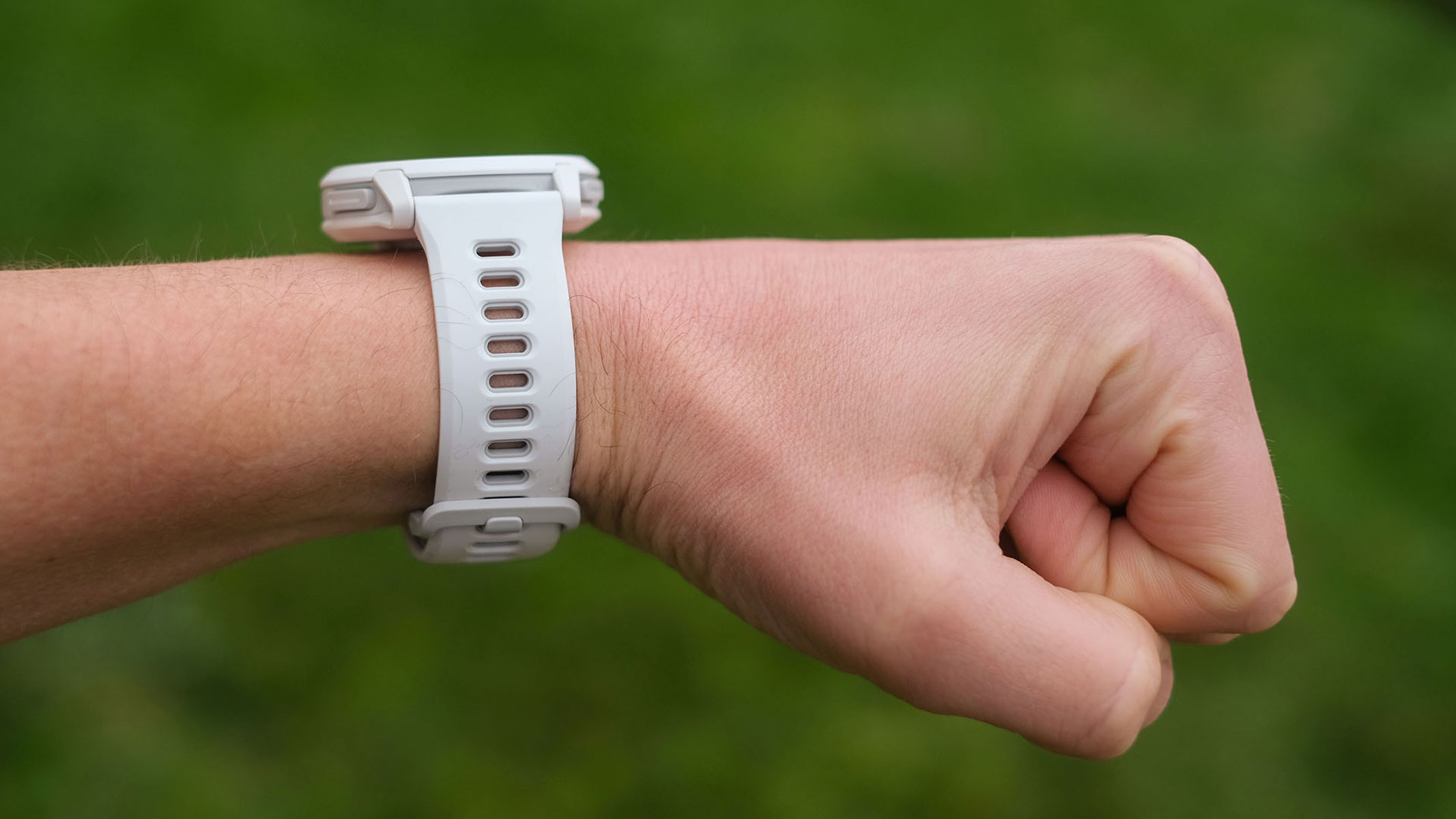
Why you can trust Live Science
Our expert reviewers spend hours testing and comparing products and services so you can choose the best ones for you. Find out more about how we test.
The last couple of years have seen a key trend emerge among fitness and running watches. Many more of them now use bright, colorful OLED screens, and the Coros Pace 4 marks the most affordable of Coros’s watches to get onboard.
Flashier display aside, the Pace 4 keeps all the key draws of the Coros Pace 3. It’s not hugely expensive, the battery lasts a good long while, it’s very comfortable and feature-wise it’s highly competitive with a comparable Garmin watch, like the Forerunner 165.
What’s missing or could be improved? The Coros Pace 4 does not have the glossiest-looking interface, and while sound its heart rate reliability isn’t quite top-tier, particularly when you stray away from the basics of running and hiking.

Key specs
Display: 1.2-inch AMOLED, 390 x 390
Always-on: Yes
Dimensions (in): 1.7 x 1.7 x x 0.46
Dimensions (mm): 43.4 x 43.4 x 11.8
Weight (without strap): 1.4 oz (40 g)
Color: White
Finish: Plastic
Battery life: Up to 19 days
GPS: Yes
Compass: Yes
Altimeter: Yes
Water resistance: 5ATM
NFC payments: No
Compatibility: Android and iOS
Storage: 4GB internal storage
The Coros Pace 4 represents a bunch of factors you may not think of immediately when shopping for a watch, but probably should. These are low weight, a slim form factor and — not unrelated — simple comfort.
This watch is slimmer than most runner’s watches and weighs just 40g. What it doesn’t have is a flashy design.
The Coros Pace 4’s body is plastic, as are the side buttons and the crown. There’s a sense of design deliberation in the subtle two-tone finish, but this is not a luxury watch. It’s a practical one. And the crown, the control dial, does look a bit toy-like, decked out in grey plastic.

Its screen uses an unspecified kind of mineral glass rather than a Corning type or Sapphire. But now weeks into testing, the casing still looks great and I am yet to scratch the screen. There’s no raised lip above the screen, though, which can help further avoid scrapes if you plan on giving your watch a load of punishment.
And like just about every good watch in this class, the Coros Pace 4 has 5ATM water resistance. It’s good enough for pool swimming but is “not for diving” as Coros highlights on its own spec sheet.
While the Pace 4’s crown looks a little cheap, it is also one part that makes the watch stand out. It turns smoothly, and is used to glide down menus. Coros has also given the watch surprisingly good haptics, with scrolling accompanied by little clicks.
The Coros Pace 4’s lead feature is its screen, though. It has an OLED display, where the Pace 3 and older models had boring-looking but practical MIP ones. We’re seeing the same trend here as Garmin has adopted. Now that AMOLED screens are pretty energy efficient, companies like Coros can give us a brighter, sharper, more colorful appearance without killing battery life.

It’s a good example of this kind of screen, too. It’s a 1.2-inch, 390 x 390 screen with peak brightness of an impressive 1,500 nits. Coros, ever a battery life fiend, is quite careful with how hard it pushes brightness so that power doesn’t leap off the display in the way that a Garmin Forerunner 570’s, for example, does. But the brightness is there for those super-bright environments where it’s really needed.
The Coros Pace 4 has an ambient light sensor, so can automatically adjust brightness to suit ambient conditions.
You might assume a value-led watch like the Pace 4 is intended to do the basics only, but there’s a lot more here. Yes, it has GPS, sleep tracking, step counting and lots of exercise modes, and on top there’s both more hardcore and more trendy stuff.
The trendy part? Voice recordings. We’re in an era of microphones being jammed into fitness watches, and Coros’s concept is that you’ll use the Pace 4’s not to talk to Siri but to make voice recordings. These aren’t to send to friends over WhatsApp, but to document your outdoor adventures.

And Coros Pace 4 is the unusual watch that has a microphone but no speaker. We did find Coros’s application of Voice Notes a bit clunky, though. It requires a long press of a button, a flick of the crown then three additional button presses. We can imagine it going ignored by many, if not most, owners. Nice idea, though.
It does support music too, although in a way that may not be all that useful to some of you. The Pace 4 will stream music to wireless headphones — or a speaker — but has no streaming service support, so you need to supply your own digital audio files.
There are plenty of miscellaneous extras too, like a metronome, phone camera shutter control, timer and stopwatch. But that’s all fluff, kept sensibly off to the side.
At the Coros Pace 4’s center is a rock-solid roster of health and fitness modes and stats. When you scroll down from the watch screen using the crown, you’ll find things like your daily activity numbers, Running Fitness score (Coros’s own take on VO2 Max, although actual VO2 Max is shown in the app too), training load, training status and recovery, among many other bits of info.
Those last stats, which relate to the balance of your workout routine versus your body condition, are part of what separates a casual fitness tracker from an athlete’s watch. Getting them at this price? A big bonus. You can of course customize this feed, if you’d like a lighter array of stats.

One part you can’t customize much, though, is the Coros Pace 4’s interface. While the structure is very similar to Garmin’s, Garmin’s latest watches have more gloss and stylistic coherence than the Pace 4.
In the Coros versus Garmin debate, software plays a key role. For example, while the Pace 4’s Coros app gives you free access to loads of weeks-long plans to cover everything from a 5K to a marathon, you don’t get more casual daily suggestions that can adapt to your current condition. You do get those with a Garmin Forerunner 165 or 265.
It’s also worth noting what you get when you take a step up in the Coros line. You can send route files to the Pace 4, in order to be guided through walks, runs, hikes and so on without digging out a paper map and compass. The Pace 4 does not have on-watch maps, though, which are offered in the Coros Pace Pro or Apex 4. Instead you’ll see what’s called a breadcrumb trail, which is just a line showing where the route heads. It’s nearly as good for many, but is worth thinking about.
On the health side, the Pace 4 records all-day heart rate, tracks your sleep admirably, estimates your stress level throughout the day and has 39 activity tracking modes. You choose which of these end up on the watch menu in the phone app.

There are a few minor omissions. The Coros Pace 4 does not have ECG, whose main job is to look for signs of arrhythmia. And while the watch has a barometric altimeter, it’s not used to work out how many sets of stairs (or the equivalent thereof) you climb each day.
The Coros Pace 4 puts in an impressive performance considering its price, and that’s at least in part down to fairly aggressive adoption of newer tech. This is one of the more affordable watches to use dual-frequency GPS, which can improve signal reliability in more challenging environments. We’re talking about spaces beyond low-rise residential sprawl, such as when running among skyscrapers or under a dense forest canopy.
Distance stats are extremely similar to those of a Garmin Forerunner 970 we used for comparison purposes. Even over a 15.5 mile (25 kilometer) distance, the disparity was a mere 0.2%. The discrepancy was not always quite that low, percentage-wise, but was never significant.

The Coros Pace 4’s mapped routes, which show up in the Coros phone app after each outdoor workout, are very sound too.
Heart rate accuracy is solid for the most part too, especially for running, if a rung below the best performers from Garmin and Apple. On long runs the Pace 4 will sometimes record a couple of too-high peaks, skewing the max heart rate readings in your logs.
However, these are typically not sustained and the Pace 4 largely avoids the old issue of fitness watches’ heart rate readings looking all-but fabricated for the first few minutes of a workout. As usual for a watch, gym workout results are not ideal, with some missed exertion peaks. But the Pace 3 isn’t miles behind a Garmin Forerunner in this respect.
And like other Coros watches, the Pace 4’s battery life is great. In our tests, it lasted just under two weeks with a fairly heavy amount of run tracking per week, with a few gym sessions thrown in the mix too. That’s lower than the 19-day battery claim, but close enough for that to be achievable with lighter use.

An hour of tracked running, using the most power-sapping dual-frequency GPS mode, takes 6% off the charge level.
Coros doesn’t go for the usual charging cable or wireless base, instead supplying a little plastic puck that can be plugged into any USB-C power source. And it takes up very little pocket space, although it is quite easy to misplace.
The Coros Pace 4 will be an ideal watch for many folks looking for their first serious runner’s watch. It’s not super-expensive, is not excessively large and has enough features to take you from a couch-to-5K program to a fast marathon. And long battery life means it’s easy to get along with, too.
✅ Buy it if: You want a well-priced running and general exercise-tracking watch with an OLED screen that also prioritizes the practical stuff over flashy extras.
❌ Don’t buy it if: You want a watch with a metal bezel, or one that can stream music from streaming services.

Over at Garmin, the Forerunner 165 is the Coros Pace 4’s closest price rival. Coros has the cost advantage, as it has dual-band GPS and you don’t have to pay a chunk more for music support. And the screen is brighter too. On the other hand, Garmin’s interface looks better and its training features are more expansive. For us the Forerunner has the higher “tilt” preference factor, but the Pace 4 has undeniable advantages.
From Polar, there’s the Pacer. It has older screen tech and is an all-round less desirable watch these days – but you can find some great deals online.
Suunto gets closer to the mark with the Run, a pretty similar watch with a metal bezel and Gorilla Glass screen. However, wedid have slightly more heart rate issues when using it, compared to the Coros.

We wore the Coros Pace 4 for roughly six weeks over a two-month period, including extended stretches of near-24/7 wear to give the most realistic impression of its battery life in real-world conditions. We used it to record several hundred kilometres of run training, including no fewer than three half marathons, numerous gym sessions and a couple of intense spin classes. We tested the watch in both its always-on and standard screen modes, but eventually settled on using the default mode to max-out one of the watch’s key strengths.